Book Review: The Dream Machine
28 January 2026
I'm not tardy this time! I actually finished the book on the 26th, and am ready to go.
This is the last book in the "histories" categories of Stripe Press books for me (the other categories are "what happened in 1970?", "how to do things", and "organizations"), and I kind of wish I had it had been the second from the first. The ideal sequence would be: Pieces of the Action (starring Vannevar Bush, focusing on science in WW2 and early analog computing; 40s and 50s), then The Dream Machine (starring Lick, focusing on early digital computers, interactive computing, and the internet; 60s and 70s), then The Big Score (centered on early Silicon Valley hardware; 60s through mid 80s), then Prince of Persia (gaming in the late 80s), then The Revolt of The Public (about the rise of populism, but also mobile phones the web; 2010s), and finally The Scaling Era (about AI/LLMs; 2019-2025). This sequence has nice recurring characters from book-to-book, especially TDM and TBS, which are the best written (being from professional biographers) and have quite the overlapping cast. Hamming's The Art of Doing Science and Engineering also has lots of historical artifacts and characters from similar times, but is a distinct category, in my opinion.
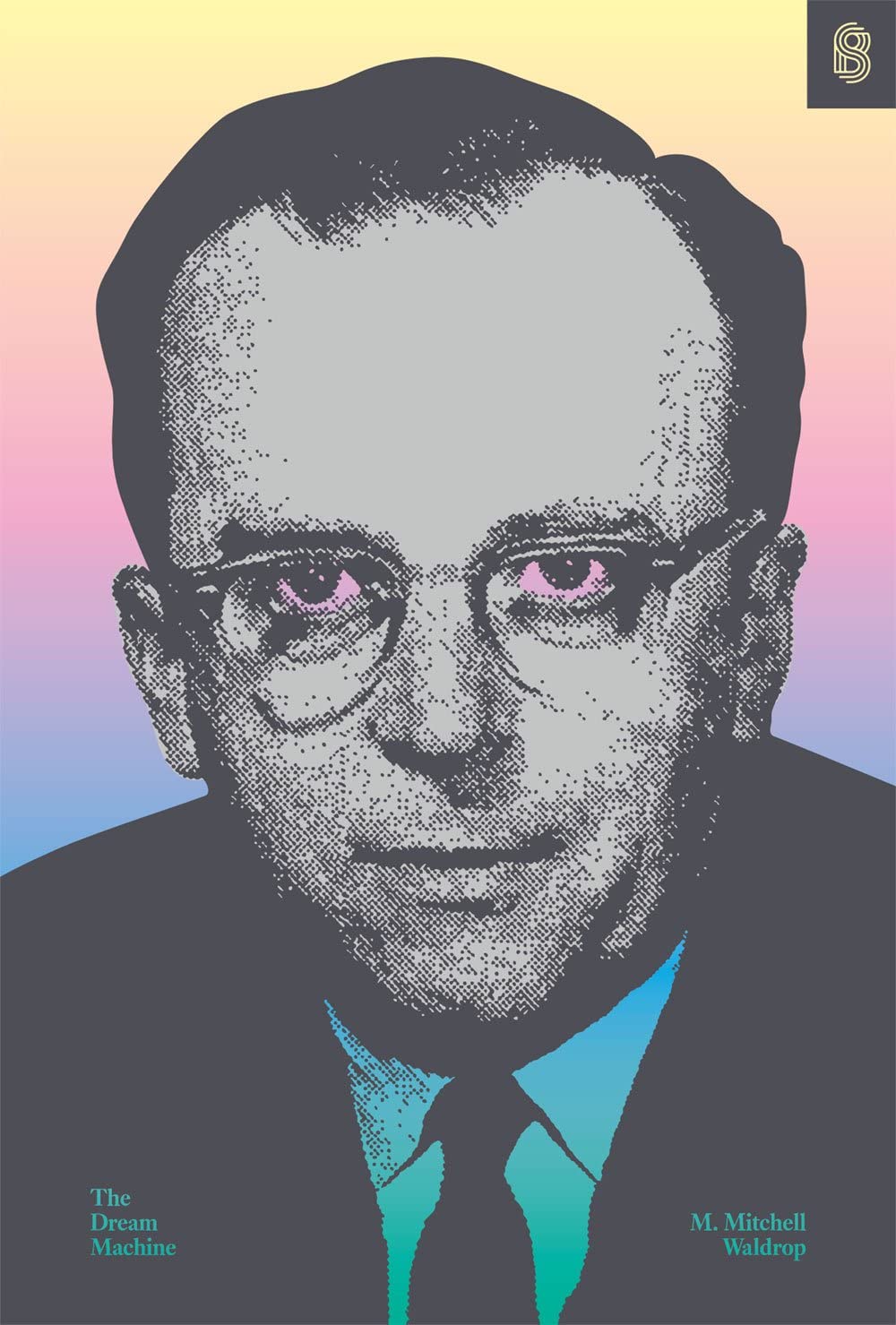
But this is getting into the weeds. I'll have a longer retrospective post or two later. How was TDM? In a word, excellent. It only faintly follows the man on the cover, J.C.R. Licklider, but is really a bundle of mini-books on different people and groups losely connected by this newfangled ARPAnet. After a brief detour into Lick's early life, there's the Psycho-Acoustics lab in WW2, then Bush, Shannon, Weiner, Von Neumann, Turing, Aiken, and others inventing the first computers at MIT and nearby. Meanwhile Lick, Miller, McGill, McCulloch and Pitts versus Skinner's behaviourism at MIT. Then Project Whirlwind and the Lincoln lab in the 50s (as well as some early AI work from John McCarthy and Minsky), a stint at BBN after MIT, and then ARPA and Project MAC in the 60s; over to IBM for a year, then back to Project MAC and then ARPA again, and afterwards Xerox PARC hosts a number of Lick's intellectual descendents; the list is too long to enumerate. So yes, it really is just about who was in Lick's orbit rather than about Lick himself, but of course that *is* being about Lick in a literal figurative sense.
So what was Lick's contribution? Early computing was, after the move form analog to digital, about batch processing on mainframes. It was not interactive, with the computer or with others. You submitted some punchcards to a whitecoat, and got the result of your program the next day. Had a bug? Too bad. Everyone thought this was normal (computers occupies whole floors at the start of their existence); but Lick had the foresight, with his psychology background, to envision interactive computing, where the computer augments human thought by performing tedious mental computing while letting the human use their intuition. But this requires the computer to respond quickly, have graphical displays, connect to other computers where other humans' data and programs reside, and so on. He had this vision of 'man-computer symbiosis' in 1960, 25 years before personal computers with graphical displays came into existence, and 35 years before wide adoption of the internet; and this vision might not have happened at all, let alone 25 years later, if he did not nurture the ARPA community. In other words, it was a very contingent event; the author Waldrop ponders if these transformations were inevitable, and correctly decides they were not. It reminds me that although progress in computers looks inevitable in retrospect, it absolutely wasn't considering how many other fields have been caught in the post-1970 Great Stagnation.
Here's the summary.
- Prologue: Lick inside the Pentagon.
- Chapter 1: Lick's early life, the Psycho-Acoustics lab at Harvard in WW2, meeting/marrying Louise, Norbert Weiner at MIT.
- Chapter 2: Bush's WW2 efforts and analog computer, Shannon's circuits/boolean logic, Weiner plea to modernize computers as digital, electronic, binary, and programmable. Von Neumann and Machly/Eckert and ENIAC. McCulloch/Pitts neural nets. Turing and turing machines/halting problem. Weiner's feedback, Von Neumanns EDVAC draft with the "stored program" code-as-data idea.
- Chapter 3: Lick and Miller's opposition to Skinner's behaviourism (the mind exists and stores models). Shannon's information theory, Weiner's cybernetics. Von Neumann completes his first draft.
- Chapter 4: Forrester and Whirlwind computer -> Project Lincoln, Lick moves to RLE/Whirlwind at MIT. SAGE system from Project Lincoln. Turing, Wiener, von Neumann die. Miller, Newell, and Chomsky end behaviorism. Newell and Simon's Logic Theorist (first AI, based on heuristics). Wes Clark brings Lick to BBN.
- Chapter 5: Lick experiences interactive computing with the TX-2 and TX-0, realizes 85% of his thinking time is rote calculation. BBN develops LGP-30 but it dissapoints. DEC's PDP-1 dissapoints. McCarthy invents LISP; then demonstrates time-sharing on an IBM 704. Lick writes Man-Computer Symbiosis. Wes Clark develops the LINC at the Lincoln lab, is linked to Q-32 at SDC in california. Corbato develops CTSS.
- Chapter 6: ARPA comes into existence after the Sputnik launch. Ruina appoints Lick as its first director, with Lick pitching man-computer-symbiosis as key to solving command-and-control woes. Lick 'invites proposals'; funds his MIT friends, Perlis at Carnegie, Fredkin at SDC with his Q-32, RAND, Feigenbaum at Berkeley, and Engelbart at SRI. The MIT effort evolves into Project MAC (CTSS->Multics). Lick writes the Intergalactic Network memo. Timesharing at Project MAC includes hundreds of users. Corbato eventually selects GE for its next computer, shocking IBM. Lick selects Sutherland as his successor. Lick goes to IBM.
- Chapter 7: Taylor succeeds Sutherland, and initiates the ARPAnet (with help from asst Larry Roberts). At regular meetings of principals, they resolve to do a store-and-forward (packet-based) network. Planning and budgets at IPTO and ARPA continue despite Vietnam. SRI, Utah, Santa Barbara, and UCLA are the first four nodes. Meanwhile, Engelbart gives his 'mother of all demos'. The idea was routers comes into being (as "IMPs") and the first few are installed. Lick leaves IBM after a year and goes to Project MAC; Multics is going poorly. 1972 ICCC demonstration of ARPAnet goes well.
- Chapter 8: Goldman and Pake form and direct Xerox PARC. Taylor joins. Starkweather invents laser printing. They hire a bunch of familiar faces, incl Lampson from Berkeley. Alan Kay joins with his Dynabook idea which evolves into the Alto (Smalltalk language, windows/icons GUI, pixel screen, desk form factor, ethernet). Metcalfe invents ethernet, based off the ALOHAnet. Bob Kahn and Vint Cerf design TCP/IP and install many more IMPs. Beancounters originally from Ford slowly kill funding and talent moves elsewhere in the early 80s. Lukasik gets email at the pentagon and ARPAnet support grows. Lick emergency-rejoins ARPA as director, but dealing with Heilmeier and Vietname makes ARPA become DARPA and requires relevances statements.
- Chapter 9: Lick returns as director to Project MAC, but is a poor manager and is demoted to research. Lick writes his "Multinet" article presaging the internet. Computing advances lead to the end of batch processing and the rise of personal computing, through DEC's PDP-line and VAX followed by the Apple II (Steve Jobs would visit PARC and see the Alot, inspired) and IBM PC, but these machines are not interactive until Lisa and MS-DOS. The ARPAnet merges with other local area networks, helped along by NSF funding, forming the internet. Lick continues to tinker as professor emeritus as MIT until his death.
- Addendum: three essays by Lick are included: "Man-computer Symbiosis", "Intergalactic Network", and "The computer as a communication device".
Here are my takeaways.
- Scientific Freedom. Lick stresses many, many times how he does not interfere with what researchers choose to do, only expecting excellence and hard work. He likely picked this up from his boss, Smitty Stevens, in the Psycho-Acoustics lab, who had a similar philosophy. The book also emphasizes how the "behaviorism" dogma in psychology and the batch processing dogma in early computing were both stifling to new ideas, but conformity was socially enforced. Another aspect of this is how innovative work decreased significantly when ARPA become DARPA and proposals now had to include a defense relevance statement (triggered nominally by budgets crunches due to Vietnam, around 1970); even if such statements were easy to make, there was a major chilling effect.
- Bubbles. Huber/Hobart's filter bubble (from Boom) really applies here, in the ARPA community of the 60s and Xerox PARC in the 70s: Lick was able to selectively dole out funding to true believers, and was very intentional about building a community that believed in his interactive, distributed computing vision. Likewise, Goldman at PARC, with his directive to build "the office of the future", gathered a similar group of researchers who build Alto and Smalltalk. In both cases, the collective delusion raised people's ambitions and enabled them to do something great (in combination with the former point).
- Vision can be very disjoint from execution. It was sobering how early the initial ideas in neural nets (1940s) and AI (1950s) were formed, with the belief that their fruition would come ~10 years later, yet the actual ending (which combined the two) was more like 70 years later. Meanwhile other ideas came to fruition rather quickly, like time-sharing and networking. Is this unavoidable, or a matter of the people and resources brought to bear? Likely the former; which means good judgement is important to identify the far-reaching-yet-around-the-corner discoveries.
This book was sort of a mini-tour of my computer science degree, which made it enjoyable to notice when different core concepts surfaced (like Shannon's Information Theory Paper or Kahn/Cerf's TCP/IP). That said, being one of the two books written by professional biographers (the other being The Big Score), I have to rate it right next to that one on overall quality.
I'm now reading The Origins of Efficiency by Brian Potter. Just 7 books left! It's all moving so fast now, I can feel the momentum building.